How to read this: Sumbawa Luxury is an independent concierge guide — we curate and compare eco-luxury stays, surf trips and island experiences, then arrange your booking through a vetted operating partner. We do not own or operate the resorts, and resort or brand names (including any historical Aman/Amanwana reference) are used only as neutral examples, not claims of affiliation. Prices are by quote and vary by property, season and party; figures here are indicative. Flights, ferries and surf seasons change — confirm before you travel. This is general information, not a binding offer.
The best time to visit Sumbawa is generally the dry season from around April to October, when days are sunniest, roads are passable and the main Sumbawa surf season overlaps. Outside these months the island runs greener and quieter, with heavier showers, softer light and a more local rhythm.
This page unpacks Sumbawa weather month by month, how the surf and whale-shark seasons line up, and what that means for eco-luxury resorts, remote beaches and logistics. Sumbawa Luxury is a guide, not a tour operator: we compare, decode and then connect you to a vetted on-the-ground partner to reserve, with by-quote pricing and no promises we cannot keep.
Dry vs Wet Season in Sumbawa: What Actually Changes
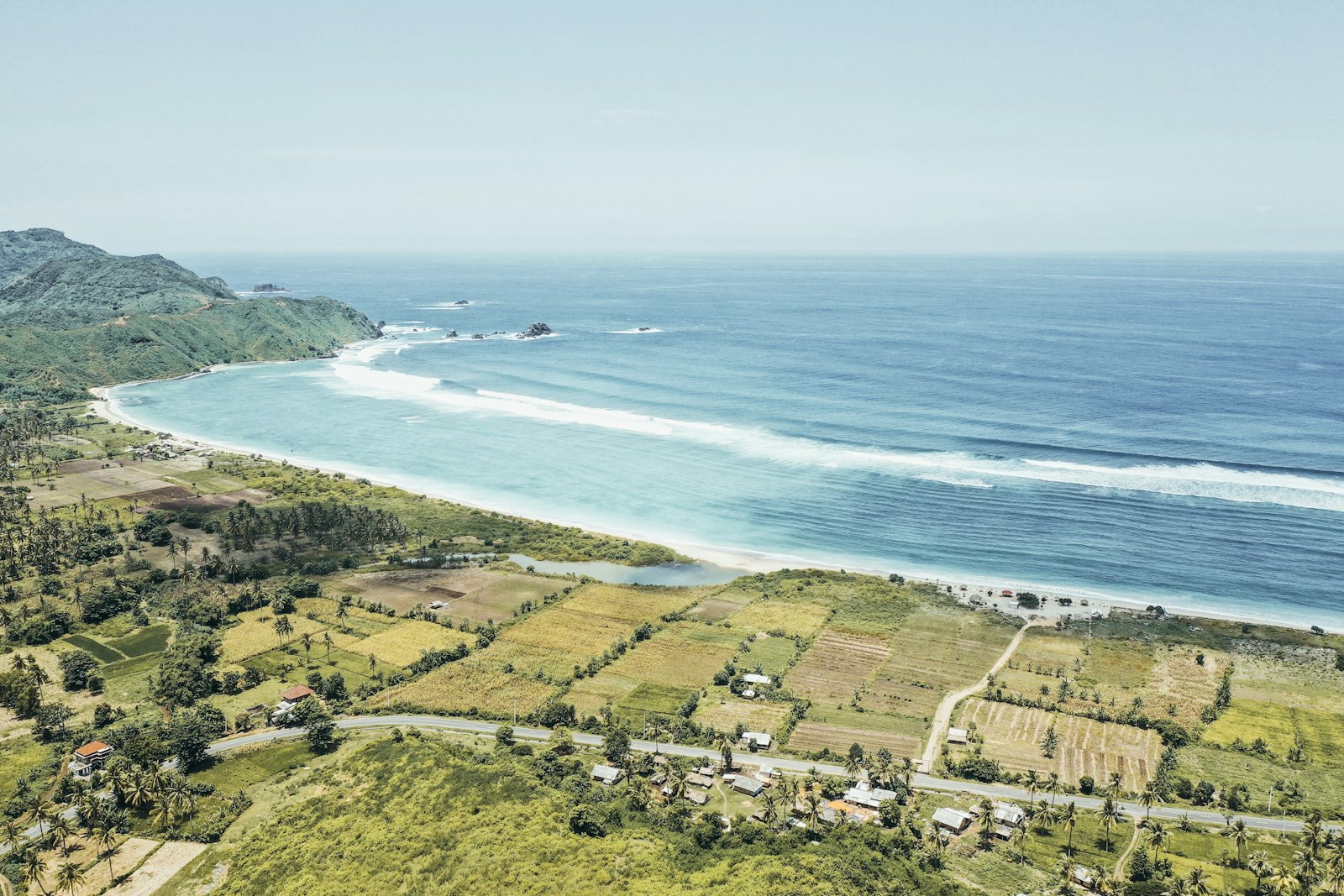
Sumbawa sits east of Bali and Lombok, in the drier half of Indonesia’s Nusa Tenggara chain. You feel that in the landscape: more savanna and scrub than jungle across much of the island, especially toward West and Central Sumbawa, with pockets of rainforest on hills and offshore islands like Moyo.
The headline split:
- Dry season Sumbawa (approx.)
- April – October, sunniest and generally driest months.
- Wet season Sumbawa (approx.)
- November – March, more frequent rain and thunderstorms, especially December – February.
- Average daytime temperatures
- ~28–32°C year-round at sea level, hotter in exposed bays; nights a few degrees cooler. (Public climate data, 1991–2020 normals.)
- Sea temperatures
- Roughly 27–30°C year-round; most travellers do not need a full wetsuit, just a rashguard for sun and reef.
These are patterns, not guarantees. Sumbawa can see rogue showers in August and blue-sky spells in January. Climate shifts have also made seasons less predictable than they were a decade ago. We plan in probabilities, not promises.
Dry Season (April–October): Clearer Skies, Easier Logistics
For most travellers, the dry season is the best time to visit Sumbawa. You get longer strings of clear days, more reliable boat access and fewer cancellations on domestic flights and ferries.
- Rain: Usually lighter and less frequent. Short squalls roll through, but you are far less likely to lose multiple days to solid rain.
- Roads & access: Dirt tracks to surf breaks and remote beaches are generally driveable. River crossings that wash out in the wet are more manageable.
- Visibility: Coastal water is typically clearer, especially away from river mouths after the wet-season run-off has settled.
- Wind: Trade winds pick up through June–August. Good for some surf setups, choppy for others; afternoons can blow out more exposed bays.
The trade-off is that dry season is also when the island is busiest by Sumbawa standards. That still feels low-key compared with Bali: more surfers and spearfishers than mass tourism. Popular breaks can see morning crowds in June–August; quieter headlands and reef passes exist if you are willing to move.
Wet Season (November–March): Greener, Quieter, Less Predictable
Wet months flip the script. Hills that went gold in September flush bright green by December. Villages slow slightly between storms. You may have a beach almost entirely to yourself on an overcast weekday.
- Rain & storms: Heaviest typically December–February. Showers can be brief or settle in; thunderstorms are common.
- Heat & humidity: Feels hotter and heavier, especially before an afternoon storm breaks.
- Roads: Potholes, mud and washouts are real, especially off the main trans-island road. Transfer times stretch.
- Sea conditions: Swell is more variable; some surf options still work for those who know where to look, but classic dry-season patterns loosen.
Wet season is not “off-limits”. It is simply a different kind of trip: more time in one place, more acceptance that a jungle walk or whale-shark search might get rained out, more space to yourself in eco-luxury resorts that can be close to full in July.
Sumbawa Surf Season: How It Overlaps the Dry Months
For surfers, the best time to visit Sumbawa is the main Sumbawa surf season that overlaps the dry months. Broadly, the most consistent Indian Ocean swell and favourable wind mix fall between May and September, with workable shoulders on either side depending on your tolerance for size and crowd.
Sumbawa is long and varied. West Sumbawa (around spots like Yo-Yo’s, Super Suck and Scar Reef) faces differently to the iconic reef passes of Lakey Peak and neighboring breaks in Central Sumbawa. Wind, tide and swell direction play out differently in each zone.
West Sumbawa Surf Window
West Sumbawa leans into dry-season trade-wind energy.
- Peak consistency: Approximately June–August for powerful Indian Ocean swell.
- Shoulder months: April–May and September–early October can be excellent, with fewer people.
- Wind pattern: Mornings are typically cleaner; afternoon trades can ruffle more exposed breaks.
This coast rewards patience and mobility. One reef is howling onshore, a bay ten minutes away is groomed. This is where travelling with a clued-in driver and reading tide charts matters more than the month on the calendar.
Central Sumbawa & Lakey Area Surf Window
Central Sumbawa, including the Lakey area, is famous for its mechanical reef setups. Here too, the main Sumbawa surf season sits inside the dry months, though each wave has its own sweet spot for wind, tide and swell direction.
- Most reliable period: Roughly May–September, with mid-season often delivering the longest run of quality days.
- Less-crowded windows: April and October can be more variable, but line-ups thin noticeably.
- Wet-season potential: On certain wind shifts, some waves can still fire in the wet. This suits flexible, repeat visitors rather than first-timers trying to hit specific conditions.
If surfing is your main driver, see our dedicated Sumbawa surf season guide for a deeper breakdown by coast, skill level and style. Then plan your trip with us on WhatsApp or email so we can align your dates to the type of waves you want — heavy reefs, user-friendlier setups, or a mix.
Whale Sharks in Saleh Bay: Seasonal, Never Guaranteed
Sumbawa’s other headline seasonal draw is swimming with whale sharks in Saleh Bay, off the north coast. Here, whale sharks are often sighted aggregating around traditional fishing platforms (“bagan”), feeding on baitfish spills. It is one of the more accessible in-water whale-shark experiences in Indonesia, but it is still wildlife, not a theme park.
Best Months for Saleh Bay Whale-Shark Encounters
Local partners and community fishers report more reliable presence of whale sharks across parts of the dry season, when sea conditions are calmer and bagan activity is steady. However, the exact timing of peak sightings varies year to year. Factors include food availability, fishing patterns and wider ocean conditions.
- General window: Commonly referenced as several months within the dry period (approx. April–October), with some shoulder variability.
- Daily rhythm: Most operators aim for early-morning visits when sharks are more likely to be feeding near the surface.
- Sightings: Multiple animals can be seen on a good day; on others you may meet one or none.
No ethical guide or resort can guarantee a whale shark on your dates. Photos online tend to show the best days, not the quiet ones. Our role is to:
- Explain realistically what your chances look like for your preferred month.
- Connect you to a vetted, licensed local partner who follows basic interaction guidelines (no touching, no flash, respectful distance).
- Help you combine Saleh Bay with other experiences — such as Moyo Island or a surf leg — so the trip is worthwhile even if the whale sharks do not appear.
For a detailed breakdown of the experience itself, see our Saleh Bay whale shark guide, then plan your trip with us to match dates, tides and logistics via email or WhatsApp.
Moyo Island & Beach Time by Season
Moyo Island, off Sumbawa’s north-west coast, wears the seasons differently to the drier southern surf belts. It has more forest and springs, with waterfalls and mangrove edges that shift noticeably between wet and dry.
Dry Season on Moyo: Calmer Seas, Clearer Water
From roughly April to October, sea conditions between the Sumbawa mainland and Moyo are generally more favorable for speedboats and small resort launches.
- Boat access: Fewer weather-related cancellations; crossings more comfortable for guests unused to chop.
- Water clarity: With less run-off from the mainland, nearby reefs and house reefs can be especially clear.
- Trails & waterfalls: Some waterfalls reduce to lighter flow by late dry season, but tracks are firmer and less muddy.
This is the most straightforward time to pair an eco-luxury resort on Moyo with a stay at a south-coast surf base or a quiet beach villa near West Sumbawa’s headlands.
Wet Season on Moyo: Fuller Falls, More Weather Risk
In the wet months (November–March), Moyo feels lusher. Springs swell, and forest tracks smell of leaf litter and petrichor. The trade-off is logistics:
- Sea state: More wind and squalls mean bumpier crossings. In heavier weather, some resorts and local partners will postpone or cancel for safety.
- Trails: Trails to waterfalls can turn slippery. A local guide and proper footwear stop this being a problem, but you will move slower.
- Visibility: Close to river mouths after rain, visibility drops; offshore patches can remain clear, but you may need a longer boat ride.
For guests who prioritise waterfall volume, birdlife and soft, rainy atmospheres over a guaranteed tan, shoulder wet months can still work. For those planning a once-in-a-decade trip to a high-end eco-luxury resort on a tight schedule, we generally advise aiming inside the mid-dry window.
Explore our curated eco-luxury resort picks to see how different properties handle the seasons, from boat policies to wet-weather activities.
Dry vs Wet: A Straight-Talking Comparison
To help you decide when to go Sumbawa more quickly, here is a blunt dry-season versus wet-season comparison for most travellers.
| Factor | Dry Season (Apr–Oct) | Wet Season (Nov–Mar) |
|---|---|---|
| Overall reliability | Highest: more sun, fewer transport disruptions | Lower: weather can disrupt boats, flights, activities |
| Surf consistency | Best, especially May–Sept; aligns with main surf season | Mixed; some windows but less predictable |
| Whale-shark chances in Saleh Bay | Several stronger months within this window (never guaranteed) | More variable; trips still run, but patterns shift |
| Water clarity | Generally clearer, especially away from river mouths | Reduced near run-off after heavy rain |
| Landscape | Drier, golden savanna; some waterfalls reduced by late season | Greener hills, fuller waterfalls, more dramatic storms |
| Heat & humidity | Hot but more manageable; lower humidity | Hotter and more humid, especially pre-storm |
| Crowds & availability | Busier in key surf hubs and high-end lodges; advance booking wise | Quieter; more last-minute potential but fewer scheduled services |
| Prices (across mid-range to eco-luxury) | Often at standard / high-season levels | Some properties offer lower wet-season rates |
These are generalisations. Exact pricing is always by-quote and property-specific; our partner quotes are based on live availability and seasonal offers, last verified June 2026.
Shoulder Season Trade-Offs: April, May, September, October
For many discerning travellers, the edges of the dry season — especially April–May and September–October — offer the most interesting balance of conditions, space and value.
Early Dry (April–May)
- Weather: Rains usually tail off across these months, though April can still see occasional heavier showers.
- Surf: Swell begins to build; you may score quality waves with fewer people than in June–August.
- Landscape: Hills retain more green from the wet season; waterfalls have better flow than late dry.
- Logistics: Domestic flight schedules into Sumbawa’s airports are usually stable; ferries less impacted by storms.
This is an excellent window for those wanting both surf and some land time — say, a week split between a south-coast break and a calmer north-coast bay.
Late Dry (September–October)
- Weather: Still mostly dry, with a slow return of humidity and the chance of first pre-wet showers by late October.
- Surf: Swell consistency gradually eases, but quality pulses still arrive; line-ups thin as peak-season crowds peel away.
- Sea state: Seas remain relatively manageable around Moyo and Saleh Bay compared with full wet-season chop.
- Value: Some accommodations edge toward shoulder pricing; availability improves for last-minute luxury enquiries.
We often recommend September or early October for couples and groups wanting a softer surf focus — a few high-quality sessions backed by long, quiet beach days, snorkelling and simple village walks.
How Sumbawa’s Weather Affects Getting There
Seasonality in Sumbawa is not only about what you do, but how easily you move. Rain, wind and swell all ripple into flights, ferries and road transfers.
Flights & Ferries
- Flights: Sumbawa is served by domestic airports such as Sumbawa Besar and Bima, fed from hubs like Lombok, Bali and sometimes Java. Schedules tend to be more stable in dry months; in the wet, afternoon storms can trigger delays or diversions.
- Ferries: Public ferries connecting Lombok–Sumbawa and Sumbawa–Flores operate year-round, but rougher seas in the wet season increase the chance of slower crossings or disruptions.
- Private boats: Resort launches and charter transfers may postpone or cancel crossings if conditions are marginal, especially for open-deck vessels.
For a fuller breakdown, see our guide on how to get to Sumbawa, which we keep updated as routes and schedules evolve.
Roads & Remote Access
Inside Sumbawa, a single main road runs the island’s length, with smaller paved and dirt spurs running south to surf zones and north to ports and bays.
- Dry season: Distances are long but more predictable. A multi-hour drive to a remote surf base or eco-lodge is tiring, not treacherous.
- Wet season: Heavy rain can flood low-lying sections, create potholes and saturate tracks to remote coves and villages. Four-wheel-drive and local knowledge become more important.
We work with partners who flag realistic transfer times for your dates, not just dry-season estimates. If you send your provisional travel window via plan your trip, we can tell you quickly which areas are best aligned to your risk tolerance for disruption.
Costs by Season: What Changes, What Stays Steady
Trip costs in Sumbawa move more with property style, remoteness and service level than with the calendar alone. That said, seasons do play a role, especially at the high end.
- Surf camps & simple stays: Many maintain fairly consistent nightly rates year-round, with only modest fluctuations in peak surf months versus the wet season. Shared-boat and guiding inclusions matter more than month-based pricing.
- Eco-luxury resorts & villas: These are more likely to run distinct high-season (often tied to both Western holidays and dry months), shoulder and lower wet-season rates.
- Transport & charters: Domestic flight prices can spike around Indonesian holidays and school breaks more than by weather alone. Private boat and vehicle charters may add wet-season surcharges if conditions require bigger, slower or more heavily crewed vessels.
As a very broad orientation (last verified June 2026, always by-quote):
- Simple surf stays / homestays: Often from lower double-digit USD-equivalent per person per night, depending on board and inclusions.
- Mid-range boutique lodges: Commonly in the low to mid triple-digit USD-equivalent per room per night.
- Eco-luxury villas & island resorts: From the upper triple digits into the low four digits USD-equivalent per villa or suite per night, varying by exclusivity, inclusions and season.
For more detail across flights, transfers, guides and different styles of stay, see our full Sumbawa trip cost guide. Our role is to help you understand the trade-offs at each spend level and then hand you to a partner who can price your chosen dates accurately.
Matching Your Dates to Your Priorities
There is no single “best month” that suits everyone. The right time to visit Sumbawa depends first on what you care about most, and only then on what the island is doing that month.
If Surf Is Your Priority
- Most consistent performance: Aim for June–August if you are chasing powerful, frequent swell and are comfortable with busier take-off zones.
- Balanced conditions & space: May and September are often sweet spots for quality surf with a little more breathing room.
- Throttle back crowds: April and October for competent, flexible surfers who prioritise emptier line-ups over absolute swell reliability.
If you are new to Sumbawa, we recommend talking through your level and wave preferences via plan your trip. A reef pass that looks dreamy in drone footage can be punishing at the wrong tide or size.
If Whale Sharks and Marine Life Draw You
- Saleh Bay whale sharks: Target months inside the dry-season window when sea conditions are steadier and local patterns suggest stronger presence. Exact targeting is part of our one-to-one trip planning.
- Snorkelling & casual reef time: Any dry-season month works; shoulder months offer good clarity with fewer other boats at popular moorings.
We plan whale-shark legs conservatively: advising early starts, flexible back-up days where possible, and enough non-whale-shark content (villages, waterfalls, reefs) that you will still leave satisfied if the sharks do not show.
If You Want a High-End Eco-Luxury Escape
- Smoothest overall experience: Mid-dry-season months (June–September) provide the most predictable boat access, outdoor dining and water-based activities.
- Quieter atmosphere, softer light: Shoulder months (April–May, late September–October) can offer more privacy and a greener backdrop, at the cost of slightly more weather variability.
- Value focus: Some top-end properties run attractive wet-season or shoulder-season offers; these can suit guests who return to Indonesia frequently and accept that a stormy day might keep them in the spa or the library.
If You Are Travelling With Children
- Weather stability: We usually suggest June–August for families, especially with younger children not used to heavy humidity or swell.
- School holidays vs crowd: International school breaks coincide with busier weeks at popular surf bases; choosing early June or early September, if your schedule allows, can be a gentle workaround.
Tell us your children’s ages and comfort in boats, surf and heat via plan your trip. We will highlight areas and months that minimise long, rough transfers and maximise safe, simple water time.
How We Help You Choose: A Guide, Not an Operator
Sumbawa Luxury does not own resorts, boats or camps. We do not sell fixed packages. Our job is to help you answer two questions clearly:
- Is Sumbawa actually right for you this year?
- If yes, which window and region match your priorities best?
We do that by:
- Curating and comparing: We maintain a live shortlist of remote stays, surf bases, eco-luxury resorts and small-scale operators across Sumbawa, with candid notes on their strengths, trade-offs, access and seasonal quirks.
- Decoding logistics: We map your intended dates against realistic weather patterns, domestic flight options, ferry reliability and transfer times.
- Clarifying budget: Once we understand your comfort level, we ask a vetted partner to quote your dates across a selection of suitable options. Prices are always ranges until you lock specific dates and room types; all figures are last verified June 2026 unless stated.
- Staying independent: No one can pay to change what we publish; if you proceed with our partner they may pay us a referral fee at no extra cost to you.
If you are ready to narrow your dates, share your rough window, group size and interests via plan your trip. We can continue the conversation on email or WhatsApp, whichever is easier across time zones.
FAQs: Best Time to Visit Sumbawa
Is July a good time to visit Sumbawa?
July sits squarely in the dry season, with generally reliable surf, drier weather and smoother logistics. It is also one of the busier months for surf hubs and eco-luxury stays, so advance booking is recommended and line-ups are livelier.
Can I visit Sumbawa in January?
You can, but January is in the wet season. Expect higher humidity, more frequent rain and a greater risk of disrupted boat trips or delayed flights. Landscapes are greener and crowds are thinner, but surf and visibility are less predictable, so it suits flexible travellers more than first-timers on tight schedules.
What is the hottest month in Sumbawa?
Temperatures in Sumbawa stay fairly warm year-round, often around 28–32°C by day at sea level. Many travellers find late wet and early dry months (around March–May) feel hottest due to humidity, though strong sun in peak dry season can feel just as intense in exposed south-coast bays.
How many days do I need in Sumbawa?
For a focused surf or whale-shark mission, allow at least 5–7 full days on the island excluding travel. To combine a surf leg, Saleh Bay and time on Moyo or at an eco-luxury resort, 10–14 days makes the transfers worthwhile and gives you buffer for weather.
Do I need to book far ahead for dry season?
For mid-range and upmarket stays in prime dry-season months (especially June–August and major holiday weeks), booking several months in advance is sensible. Simpler surf stays and homestays can sometimes be arranged closer to arrival, but selection narrows. Contact us early via plan your trip so we can check live space with partners before you lock flights.