How to Get to Sumbawa | Access Guide

How to Get to Sumbawa | Access Guide

How to read this: Sumbawa Luxury is an independent concierge guide — we curate and compare eco-luxury stays, surf trips and island experiences, then arrange your booking through a vetted operating partner. We do not own or operate the resorts, and resort or brand names (including any historical Aman/Amanwana reference) are used only as neutral examples, not claims of affiliation. Prices are by quote and vary by property, season and party; figures here are indicative. Flights, ferries and surf seasons change — confirm before you travel. This is general information, not a binding offer.

To answer how to get to Sumbawa simply: you either fly into Sumbawa Besar (SWQ) or Bima (BMU) via Lombok (LOP) or Bali (DPS), or you travel overland across Lombok and take the public ferry from Kayangan to Poto Tano. The right route depends on which part of Sumbawa you are heading for: surf, Moyo, Saleh Bay, or the remote west and east.

This page breaks down every realistic way of getting to Sumbawa: the airports, the ferry, overland times, and how those line up with key regions. It is written for travellers who care about both hours and headspace – the ones comparing an extra flight to a dawn ferry, or a helicopter hop to a long but scenic drive.

Sumbawa Luxury is a guide, not an operator. We research, compare and explain; then, if you wish, we connect you to a vetted local partner to quote and operate your transfers. No one can pay to change what we publish; if you proceed with our partner they may pay us a referral fee at no extra cost to you.

Overview: The Main Ways of Getting to Sumbawa

Sumbawa is the long, serrated island east of Lombok, between Bali and Flores. There is no direct international entry: you reach it via another Indonesian hub, or by sea. For planning your access, think in three layers:

  1. International gateway – usually Denpasar, Bali (DPS) or Praya, Lombok (LOP).
  2. Entry to SumbawaSumbawa Besar Airport (SWQ), Bima Airport (BMU), or Poto Tano ferry port.
  3. Final transfer – resort vehicle, local driver, boat, or occasionally helicopter for high-end properties.

In practice, most travellers choose one of three patterns:

  • Fly DPS → LOP → SWQ/BMU for the fastest, least-friction arrival.
  • Fly DPS → LOP → overland Lombok → Kayangan–Poto Tano ferry → overland Sumbawa for a slower, more local route, often used by surfers and road-trippers.
  • Fly DPS → SWQ/BMU (if offered seasonally) on limited direct services, then private transfer to your lodge or surf camp.

The tables and sections below compare these options honestly: time, comfort, and which makes sense for Lakey Peak, West Sumbawa, Moyo Island, Saleh Bay and the far east.

Airports in Sumbawa: SWQ vs BMU

Two small domestic airports serve Sumbawa:

Sumbawa Besar Airport (SWQ)
The main gateway for West Sumbawa surf zones (Maluk/Sekongkang area), Moyo Island, and much of central Sumbawa.
Bima Airport (BMU)
The logical entry for Lakey Peak and other Dompu surf breaks, and for eastern Sumbawa and onward travel toward Komodo/Flores.
Airport Code Primary gateway for Typical access via
Sumbawa Besar SWQ Moyo Island, Saleh Bay, central & parts of West Sumbawa Flights via Lombok (LOP) or occasionally Bali (DPS)
Bima BMU Lakey Peak & Dompu surf, eastern Sumbawa Flights via Lombok (LOP) or occasionally Bali (DPS)

Sumbawa Besar Airport (SWQ)

Sumbawa Besar Airport sits just outside Sumbawa Besar town on the island’s north-central coast. It is the closest airport for:

  • Moyo Island – via speedboat transfers from the Sumbawa Besar area.
  • Saleh Bay – for liveaboards or conservation-focused trips using north-coast ports.
  • Some West Sumbawa surf zones – though Maluk/Sekongkang are still several hours’ drive away.

Flight patterns (last verified June 2026): SWQ is typically served by short domestic hops from Lombok (LOP), and at times seasonally or intermittently from Denpasar, Bali (DPS). Schedules shift with airline strategy and demand. Expect 1–2 flights per day or fewer, not a high-frequency shuttle.

On landing, transfers are straightforward but basic: this is a small regional airport. Bags are offloaded quickly; there are few services beyond essentials. Private vehicles organised through your lodge or a vetted operator are strongly recommended over piecing together transport on arrival.

Bima Airport (BMU)

Bima Airport lies in the east, close to Bima town. It is the natural choice for:

  • Lakey Peak and Dompu-region surf – you drive west from BMU through Dompu to the Lakey area.
  • Eastern Sumbawa villages and bays – for more exploratory or overland-style journeys.

Flight patterns (last verified June 2026): like SWQ, BMU is generally connected by domestic flights from Lombok (LOP) and sometimes Denpasar (DPS), with frequencies fluctuating. Think handful of weekly flights rather than an hourly service.

Bima’s terminal is small and functional. Outside, expect a cluster of local taxis and shared vehicles, but comfort and reliability vary. For Lakey Peak and higher-end surf stays, almost all guests pre-arrange private drivers with their camp or preferred operator.

Flying to Sumbawa via Lombok or Bali

Your decision between Bali and Lombok as a gateway shapes the rhythm of your trip more than any other access choice. Both work; they feel different.

Via Denpasar, Bali (DPS)

Bali’s Ngurah Rai International Airport (DPS) is the most common entry point for international travellers heading onwards to Sumbawa. Reasons to choose DPS:

  • International connectivity – wide spread of long-haul and regional routes.
  • Easy overnight stop – if your onward flight to SWQ or BMU does not line up, there is no shortage of comfortable hotels and restaurants near the airport or in south Bali.
  • Pre- or post-Sumbawa add-on – some travellers consciously split time between Bali’s dining and Sumbawa’s remoteness.

From Bali, you have two ways to continue by air:

  • DPS → LOP → SWQ/BMU – most reliable, as Lombok typically has more frequent links to Sumbawa.
  • DPS → SWQ or DPS → BMU – when seasonal or direct flights are offered; convenient but subject to change year-on-year.

Transit pattern: allow time for domestic check-in, and build some slack into same-day connections. While short official minimum connection times may exist, domestic operations in Indonesia can shift with weather and congestion. For surfboards, always allow extra check-in margin.

Via Praya, Lombok (LOP)

Lombok International Airport (LOP) often provides the cleanest connection to Sumbawa:

  • Shorter domestic hops – quick flights from LOP to SWQ or BMU when running.
  • Logical staging point for the Kayangan–Poto Tano ferry if you are going overland.
  • Less crowded experience than Bali’s main terminal, for those who value a calmer start.

Typical flight routes (last verified June 2026):

  • LOP → SWQ: small turboprop services, varying by airline season.
  • LOP → BMU: comparable short domestic flights.

These are short hops, but check-in and surfboard policies still matter. Different airlines apply different sports equipment rules and fees; we suggest confirming current allowances before you lock in a routing.

Flight Costs and Patterns

Indicative one-way fares on domestic legs (last verified June 2026):

  • DPS/LOP → SWQ/BMU: roughly IDR 600,000 – 1,600,000 per person in economy, excluding surfboard or excess baggage charges.

Expect higher prices around peak domestic travel periods (Lebaran, school holidays), and lower outside those windows. Early-morning departures are often less delay-prone than late-afternoon flights as weather and congestion build.

The Kayangan–Poto Tano Ferry: Sumbawa by Sea

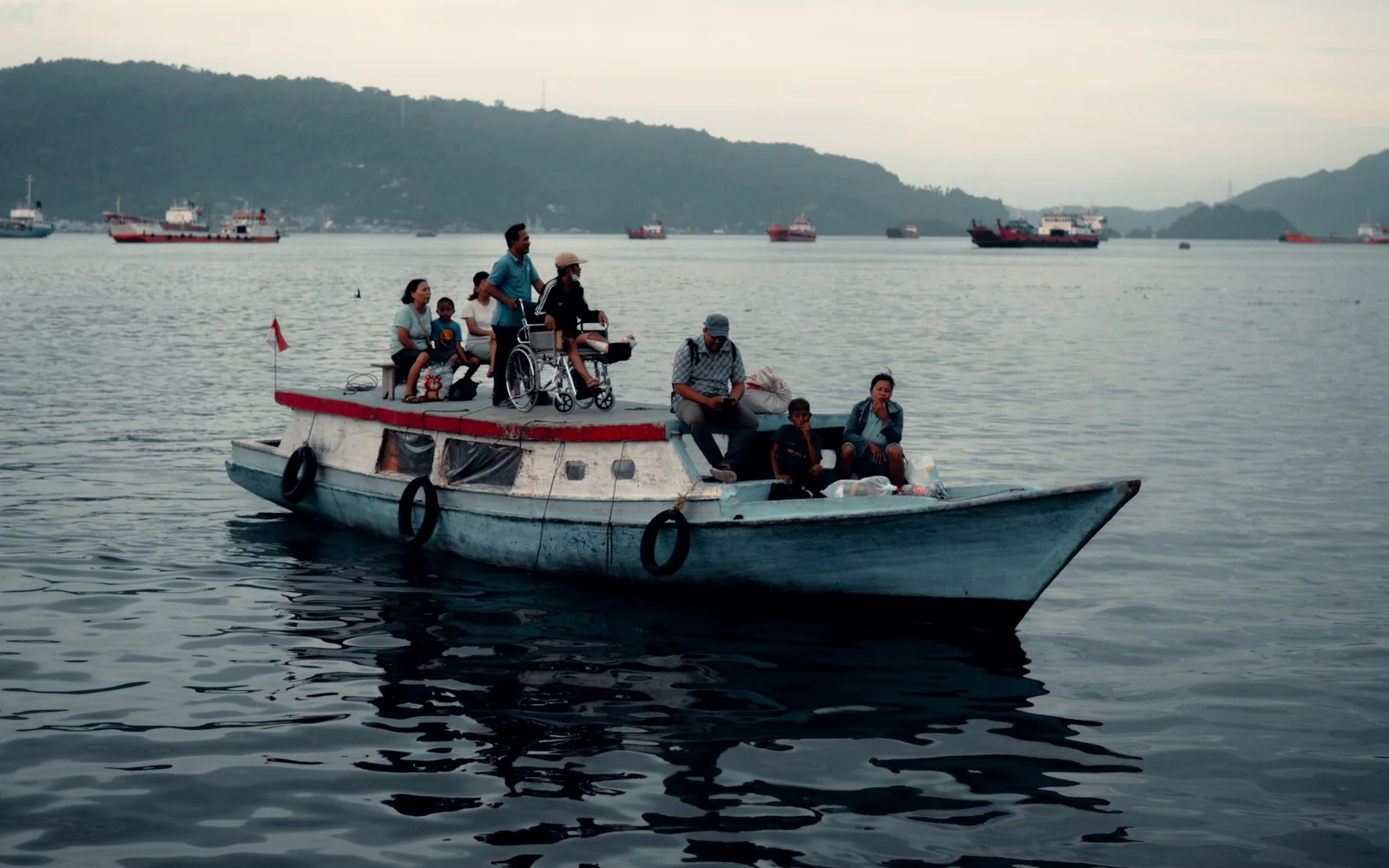
For travellers who enjoy road journeys, or for surf groups carrying multiple boards, the public ferry from Kayangan (east Lombok) to Poto Tano (west Sumbawa) is the classic route.

Key Facts: Kayangan–Poto Tano Ferry

Route
Kayangan Port, East Lombok → Poto Tano, West Sumbawa.
Crossing time
Typically around 1.5–2 hours at sea, not counting waiting and loading.
Frequency
Regular daily departures, rotating among several vessels; timings can be irregular and queue-dependent.
Type of ferry
Roll-on/roll-off car ferries carrying vehicles and foot passengers.

Conditions on board are simple: plastic seating, basic warungs for snacks and drinks, open decks where most travellers spend the crossing. It is not a cruise; it is the backbone of local logistics between Lombok and Sumbawa.

Pros of the Ferry Route

  • Flexibility with surfboards and gear – drivers routinely carry multiple boards, bikes, and dive or camera equipment.
  • Cost-efficient for groups – once you split private car and driver costs, the total can compare favourably with multiple domestic flights and board fees.
  • Scenery – the passage between Lombok and Sumbawa can feel quietly cinematic: islands strung across the horizon, fishing boats, hills catching late light.

Trade-Offs and Realities

  • Unpredictable waiting times – queues at Kayangan or Poto Tano change with truck traffic, public holidays and weather; you may board quickly, or wait a couple of hours.
  • Basic comfort – limited shade, simple toilets, no air-conditioning beyond what the sea breeze provides on deck.
  • Night crossings – possible, but not to everyone’s taste; views vanish, and vehicle loading can feel chaotic.

If your priority is comfort and time, particularly with younger children or after a long-haul flight, flying further into Sumbawa is usually the calmer choice. If you value cost efficiency and don’t mind an unvarnished local experience, the ferry is part of the adventure.

Overland Across Lombok to the Ferry

Many “getting to Sumbawa” journeys start with a drive across Lombok to Kayangan, then the ferry to Poto Tano, then a second drive on Sumbawa itself. This is the standard route for surfers road-tripping from Lombok to West Sumbawa or, with more time, onward to Lakey Peak.

Typical Lombok Overland Flow

  1. Arrive at Lombok Airport (LOP) from Bali or Jakarta.
  2. Private car and driver from LOP to Kayangan Port on Lombok’s east coast.
  3. Kayangan → Poto Tano ferry crossing.
  4. Continue by car from Poto Tano deeper into Sumbawa.

Indicative drive times (last verified June 2026; traffic and roadworks can extend these):

  • LOP → Kayangan Port: around 2–2.5 hours by private car.

The route to Kayangan passes through rural Lombok: rice fields, villages, roadside fruit stalls. It is straightforward and paved, but not a high-speed dual carriageway. Speeds follow village life – schoolchildren on scooters, cattle on the roadside.

Vehicle and driver costs for this leg vary with vehicle class and season; for a properly maintained SUV or van with air-con, expect roughly IDR 800,000 – 1,500,000 one way from LOP to Kayangan (last verified June 2026), excluding ferry tickets. We suggest confirming whether your driver fee covers waiting and return time.

Overland After Poto Tano: Distances Inside Sumbawa

From Poto Tano, you are on Sumbawa soil. Distances here are bigger than they look on the map; the island is long, the road two-lane, and village traffic sets the pace.

Indicative drive times from Poto Tano (last verified June 2026; allow plenty of buffer):

  • Poto Tano → Maluk / West Sumbawa surf zone: around 3–4.5 hours by private vehicle.
  • Poto Tano → Sumbawa Besar: roughly 3–3.5 hours.
  • Poto Tano → Dompu / Lakey turn-off: 7–9 hours, typically broken with a night stop if coming straight from Lombok.

Road conditions range from good asphalt to occasional rougher sections or roadworks. Travel is possible year-round, but the wet season can bring heavier showers and slower going.

Which Route for Which Region?

To decide how to get to Sumbawa in practice, start with your destination on the island. Here is how travellers typically match access to region.

West Sumbawa Surf (Maluk, Sekongkang and surrounding bays)

Best-fit options:

  • Fly into SWQ (Sumbawa Besar) then overland to your surf lodge – fastest if flight timings line up.
  • Or travel LOP → Kayangan → Poto Tano → West Sumbawa by vehicle and ferry – useful for board-heavy groups.

Time trade-offs:

  • Air-focused route: DPS → LOP → SWQ plus a roughly 3–4.5-hour drive to West Sumbawa can get you into the zone the same day, assuming good connections.
  • Ferry route: LOP → Kayangan (2–2.5 hours) + ferry (1.5–2 hours crossing plus waiting) + Poto Tano → West Sumbawa (3–4.5 hours) is a longer day but flexible for surfboard loads.

Lakey Peak and Dompu Surf Zone

Best-fit options:

  • Fly into BMU (Bima Airport), then drive to Lakey via Dompu – the standard choice for most surfers.
  • Overland plus ferry is possible but long: via Poto Tano and Dompu. Most people only choose this if they are already road-tripping across Sumbawa.

Indicative times (last verified June 2026):

  • BMU → Lakey Peak area: roughly 3–4.5 hours by private car or organised camp transfer, depending on time of day and roadworks.

For Lakey, flights to Sumbawa via Bima nearly always save time and energy over the ferry route. The overland/ferry path might appeal if you plan to surf multiple coasts across several weeks and enjoy the slow, iterative way of moving.

We cover Lakey logistics, seasonality and surf character in more depth in our dedicated guide: Lakey Peak surf.

Moyo Island

Moyo Island lies off Sumbawa’s north coast, remote but reachable with joined-up logistics.

Best-fit option:

  • Fly into SWQ (Sumbawa Besar), then transfer by road to the departure point for your speedboat or resort transfer to Moyo.

Higher-end lodges on Moyo typically include coordinated transfers from SWQ within their packages or via partner operators: vehicle plus private boat. These should be confirmed at booking stage; they are not walk-up services.

More on seasonality, sea conditions and logistics in our Moyo Island resort feature.

Saleh Bay and Central/North Sumbawa

For Saleh Bay (known for whale shark encounters, conservation trips and liveaboards) and much of central or north Sumbawa, SWQ remains the primary air gateway.

From Sumbawa Besar, transfers vary according to your exact base: coastal village, eco-lodge, or liveaboard rendezvous. Travel times can range from 1–4 hours by vehicle, followed by short boat hops. Detailed routing is best tailored individually.

Far East Sumbawa and Beyond Toward Flores

For journeys pushing toward Sape or eastward-leaning expeditions, Bima (BMU) is the starting point. Overland times here lengthen; roads thread through hills and smaller towns. Many travellers in this bracket are already comfortable with multi-day, cross-island travel and accept slower days as part of the experience.

Travel Times at a Glance

Route Indicative Time (one way) Notes
LOP → Kayangan Port (Lombok) 2–2.5 hours Private car; village traffic can slow progress.
Kayangan → Poto Tano ferry 1.5–2 hours at sea Allow extra for queuing and loading.
Poto Tano → Sumbawa Besar 3–3.5 hours Main coastal road; occasional slow sections.
Poto Tano → West Sumbawa surf zone 3–4.5 hours To Maluk/Sekongkang area by private car.
BMU → Lakey Peak area 3–4.5 hours Road via Dompu; surf camps commonly arrange transfers.
SWQ → Moyo Island departure point Approx. 30–90 minutes by road Varies by pier used; followed by boat.

All times are indicative and last verified June 2026. They reflect typical conditions; heavy rain, roadworks, holiday traffic and daylight preferences can stretch them. We always build extra buffer into arrival and departure plans, especially if you have fixed international flights.

Seasonality and Access: When Travel Feels Smoothest

Access to Sumbawa is possible year-round, but the feel of the journey changes with season.

Dry Season (roughly April–October)

  • Sea state: many ferry crossings feel calmer; visibility and views are usually clearer.
  • Surf season: core months for many south-facing breaks, so flights near prime weeks can fill earlier.
  • Road conditions: usually drier and less muddy off main roads, but dust increases on unpaved stretches.

Wet Season (roughly November–March)

  • Rain and storms can affect road speeds and, occasionally, ferry timings.
  • Greener landscapes and fewer visitors in many areas, if you value quieter travel days.

If you want to align surf, sea states and logistics, see our best time to visit Sumbawa guide, which pairs seasonal access reality with swell patterns and wind trends.

Entry Requirements and Practicalities

Indonesia entry requirements can evolve, so always double-check government or airline guidance close to departure, but a few constants help planning:

  • Passports should have at least six months’ validity from entry and spare blank pages.
  • Visas – many nationalities use Visa on Arrival or pre-arranged e-visas; check your category before booking non-refundable flights.
  • Domestic baggage rules – regional carriers can have tight weight limits; surfboards and camera gear often tip travellers into excess baggage.

Health-wise, Sumbawa remains less medicalised than Bali. For complex conditions, most travellers plan to be stabilised and moved back to Bali or Jakarta for serious care if needed. Good travel insurance that explicitly covers remote surf or boat activities is strongly recommended.

What We Arrange (and What We Don’t)

Sumbawa Luxury is not a tour operator, airline, or boat company. We are an independent, eco-luxury and surf concierge guide. Our role is threefold:

  1. Curate and explain – we research Sumbawa access routes, surf zones and remote stays, with clear pros and cons.
  2. Compare options for your specific plan – surf boards, mobility needs, appetite for ferries, kid ages, night driving tolerance.
  3. Connect you to a vetted local operating partner – they then quote and run your flights (where possible), transfers, drivers and boats.

We do not own vehicles, airlines or ferries. Instead, we maintain a short list of partners who have:

  • Consistent safety standards and properly licensed vehicles or boats.
  • On-the-ground knowledge of Sumbawa access, not just Bali or Lombok.
  • Clear communication in English, so you know what to expect.

No one can pay to change what we publish; if you proceed with our partner they may pay us a referral fee at no extra cost to you.

If you are mapping a trip that involves multiple ferries, internal flights, private drivers and a remote lodge, we can sketch a plan in writing before you commit. To start that process, you can plan your trip with us – email or WhatsApp – and we will respond with route options, time estimates and a suggestion of where to build in buffer nights.

Example Route Scenarios

1. West Sumbawa Surf Week from Europe

Profile: Two surfers, one week, prioritising water time over road time.

Common access pattern:

  • Fly into DPS (Bali).
  • Overnight near the airport or in south Bali to recover from the long-haul flight.
  • Morning flight DPS → LOP → SWQ the next day.
  • Private vehicle from SWQ → West Sumbawa surf lodge (around 3–4.5 hours).

Why this works: Reasonable pace, minimised ferry variables, and enough margin on either side to protect the international legs.

2. Lakey Peak Trip from Australia with Multiple Boards

Profile: Group of four surfers with quivers and camera gear, price-conscious but experienced in Indonesian travel.

Common access pattern:

  • Fly into DPS (Bali).
  • Connect onto DPS → BMU if schedules line up, or transit via LOP as needed.
  • Camp-organised or private BMU → Lakey transfer by van.

Alternative for those who enjoy road trips: DPS → LOP, then LOP → Kayangan → Poto Tano → Dompu → Lakey over ~1.5–2 days, with a stop in central Sumbawa. More logistics, more local contact, more fatigue. We usually suggest this to returning visitors who know the rhythms and want the overland experience.

For wave-by-wave detail, see our Lakey Peak surf page.

3. Eco-Luxury Moyo Island Escape

Profile: Couple prioritising comfort and privacy, limited time, happy to pay for smoother logistics.

Common access pattern:

  • Fly into DPS (Bali).
  • Either same-day or next-day flight via LOP → SWQ, depending on connection times.
  • Resort or partner-organised transfer from SWQ → Moyo departure point → Moyo Island by speedboat or private vessel.

For this style of trip, stitching logistics through a single trusted operating partner keeps stress low. You can begin that conversation through our plan your trip page and we will loop in a vetted specialist.

Choosing Between Flight and Ferry: A Plainspoken Guide

To decide between flights to Sumbawa and the Poto Tano ferry, ask yourself a few blunt questions:

  • How tight is your schedule? If you have a fixed one-week window, flights usually preserve more surf or island time.
  • How much gear are you carrying? One board each is different from a full quiver plus dive or camera equipment.
  • How important is comfort in transit? After a long-haul flight, some travellers relish a rougher ferry; others do not.
  • How experienced are you with Indonesian domestic travel? First-timers often appreciate the clarity of pre-arranged flights and private transfers.

There is no single “best” way of getting to Sumbawa, only the route that best suits your threshold for variables and your ideas about the journey. Our role is to lay that out without romance or alarm, so you know what you are choosing.

If you would like a tailored access brief – for example “Jakarta to Lakey with two kids and four boards” or “Singapore to Moyo in three nights” – you can read our Lombok–Sumbawa guide or reach out directly to plan your trip. We are comfortable working in email or WhatsApp, depending on how you like to plan.

FAQs: How to Get to Sumbawa

Is it better to fly or take the ferry to Sumbawa?

For most travellers with limited time or young families, flying into Sumbawa Besar (SWQ) or Bima (BMU) via Lombok or Bali is smoother and faster. The Kayangan–Poto Tano ferry suits those carrying lots of gear or seeking a slower, more local style of travel, but it adds hours and more variables to the journey.

Which airport is best for Lakey Peak?

Bima Airport (BMU) is the logical choice for Lakey Peak and the Dompu surf zone. From BMU it is about 3–4.5 hours by private car to Lakey under typical conditions. Most surf camps or operators offer transfers from Bima.

How do I get to Moyo Island?

Fly to Sumbawa Besar Airport (SWQ), then continue by road to a departure pier for Moyo, followed by a speedboat or private boat transfer. High-end lodges generally package SWQ–Moyo transfers or work with a partner who does; self-arranging boats on the day is not realistic at this level.

Can I reach Sumbawa directly from Bali without going through Lombok?

Sometimes. Seasonal or intermittent flights have linked Denpasar (DPS) with Sumbawa Besar (SWQ) or Bima (BMU), but these routes and frequencies change. Many travellers still route via Lombok (LOP), which tends to have more stable connections to Sumbawa.

Is it safe to travel overland across Lombok and Sumbawa?

Thousands of locals and travellers cross Lombok and Sumbawa overland every week. The main safety considerations are road conditions, driving standards, weather, and night driving fatigue. Using a reputable, licensed driver, avoiding unnecessary night travel, and building buffer time into your schedule all help keep risk and stress levels low.

Plan Your Trip
WhatsAppPlan Your Trip