
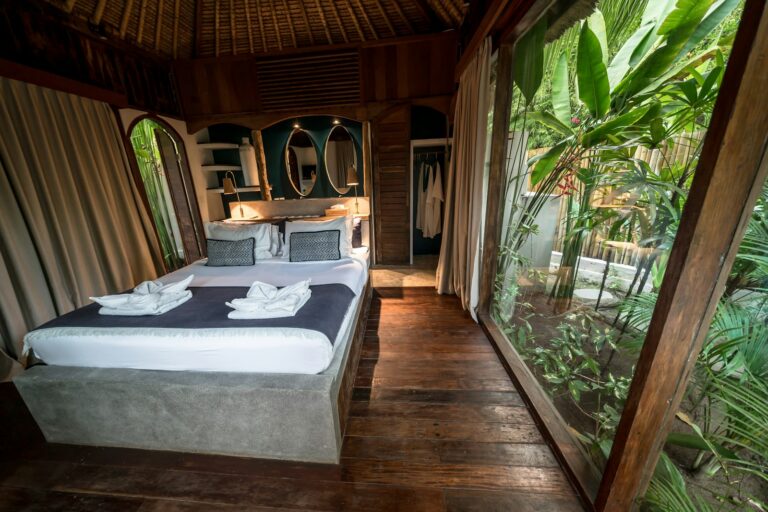
Moyo Island & Mata Jitu Waterfall: A Visitor’s Guide
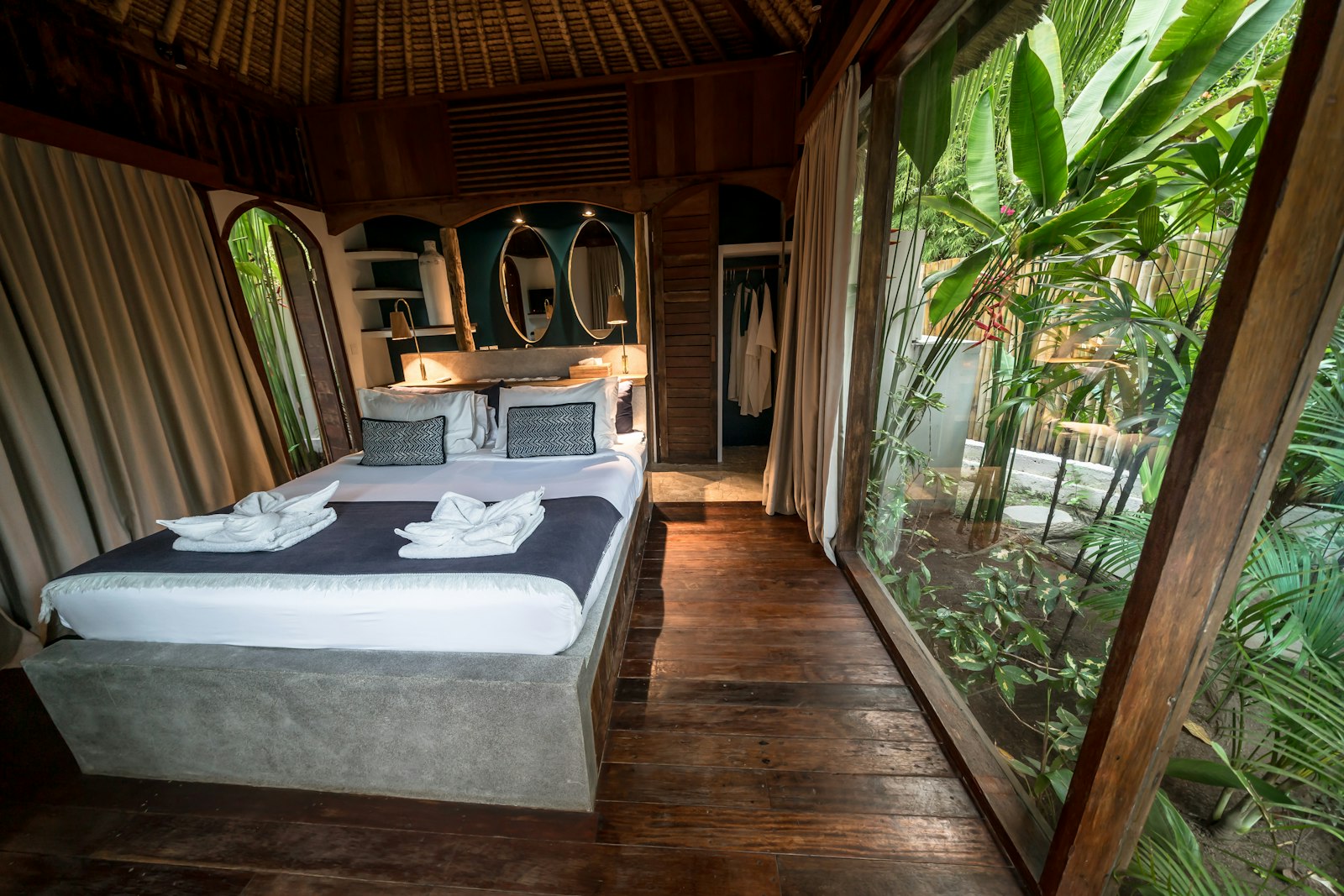
Moyo Island Mata Jitu Waterfall is the most visited jungle cascade on Moyo: a limestone staircase of turquoise pools hidden inland from the island’s quiet north coast, reached by boat from Sumbawa Besar and a short walk under forest canopy. This guide explains exactly where it is, how remote it feels, what the Mata Jitu waterfall visit involves, and how to pair it with Moyo’s eco-luxury seclusion.
What Is Mata Jitu Waterfall?
Mata Jitu is the best-known Moyo Island waterfall: a series of spring-fed, terraced pools in dense dry forest, stained milky-turquoise by dissolved limestone and framed by moss, roots and vines.
You are not hiking to a huge plunging cataract. You are walking into a contained, almost amphitheatre-like ravine where water slips gently over mineral shelves into a chain of basins you can swim in (in designated sections only; some pools are spiritually significant and kept for viewing rather than bathing).
Key things to understand about Mata Jitu waterfall:
- Type: Travertine (mineral) terraces and small cascades, not a single vertical drop.
- Water source: Jungle springs, so it runs year-round, with colour and volume shifting by season.
- Experience: A short, accessible jungle walk and a cooling swim rather than a full-day expedition.
- Context: Part of Moyo Island’s forest and marine reserve, with local village guides regulating visits.
For many travellers, Mata Jitu is the soft-adventure counterpoint to Moyo’s empty beaches and reef. For others, it’s the reason to come across from Sumbawa Besar for a half-day: a clear, defined objective in an otherwise very quiet island.
Where Moyo Island Sits – And How Remote It Really Is
To place Mata Jitu, you need to understand Moyo Island itself.
Moyo Island in context
Moyo Island (Pulau Moyo) lies in the Flores Sea, just off the north coast of Sumbawa Besar in West Nusa Tenggara. On a map, you’ll see it as a compact, roughly oval island fringed by reefs, separated from Sumbawa by a narrow channel.
- Province
- West Nusa Tenggara, Indonesia
- Nearest mainland hub
- Sumbawa Besar (town and small airport)
- Sea
- Flores Sea (north of Sumbawa)
- Approx. travel time from Sumbawa Besar to Moyo
- ~60–90 minutes by local-style boat in fair conditions
Although it is geographically close to Sumbawa, Moyo still feels remote because:
- There is no bridge or public ferry on a published timetable. All crossings are by chartered local boats or resort-arranged transfers.
- The island is lightly populated, with a handful of coastal villages and no large town.
- Roads are basic and mostly unpaved: expect dirt tracks, motorbikes and pick-ups, not air-conditioned coaches.
- Tourism infrastructure is intentionally limited: think small ecolodges and simple homestays, not tower hotels.
This is the same island that hosted one of Indonesia’s earliest “tented eco-luxury” concepts in the 1990s (Amanwana, now closed at time of writing; we reference it purely as a neutral, historic example, not as an affiliate). The legacy remains: Moyo is still framed as a low-density nature retreat rather than a mass tourism beach.
How close is Mata Jitu waterfall to the coast?
Mata Jitu waterfall sits inland from the northern coast of Moyo, a short drive or motorbike ride from the main landing beaches used by boats from Sumbawa Besar. Distances are modest in kilometres but slowed by road quality.
Expect:
- ~15–30 minutes by motorbike or 4×4-style pick-up from common beach landing points near the main village.
- Then ~15–20 minutes walking along a forest path with some gentle elevation and roots/rocks underfoot.
You don’t need to trek for hours. But you are entering proper forest: warm, humid, with bird calls and insects, and occasional monkey sightings if you are quiet and patient.
Reaching Moyo Island from Sumbawa Besar
Most visitors reach the Moyo Island waterfall as a day trip or overnight from Sumbawa Besar. There is no direct public transport; logistics are pieced together from flights, cars and boats.
Step 1: Getting to Sumbawa Besar
You have two main options to reach Sumbawa Besar (SWQ airport):
- By air: Short domestic flights connect Sumbawa Besar with other islands in West Nusa Tenggara via regional hubs (routes and schedules change frequently; they are often limited and may be seasonal). Always check the latest route map and allow buffer time.
- By land & sea: Overland from Lombok or Bima via ferry and coastal road. This is slower but can be folded into a wider Sumbawa surf or overland itinerary.
From Sumbawa Besar airport or town, you’ll travel by car to the small harbours north of town used for Moyo crossings. Driving time is typically 20–40 minutes depending on which harbour your operator uses and road condition that month.
Step 2: The boat from Sumbawa Besar to Moyo Island
There are no large ferries; crossings use local-style wooden boats and smaller speedboats run by licensed local operators or by resorts on Moyo Island.
Indicative points (not a fixed offer, and always dependent on sea conditions and boat type):
- Travel time: Approximately 60–90 minutes in typical dry-season conditions, sometimes longer if seas are lumpy or boats run slower.
- Departure windows: Usually morning or early afternoon to keep crossings in calmer daylight hours. Night crossings are rare and often avoided for safety.
- Sea state: The channel is generally manageable in the dry season, but can be choppy on windy days. If you are prone to seasickness, plan accordingly.
- Safety basics: At minimum, expect life jackets and a skipper who knows the channel. This is not a luxury yacht transfer; standards are “simple but functional”.
Costs: what to budget for the crossing
We don’t publish fixed rates because they move with fuel prices, boat type, group size and how your stay or day trip is packaged. As a ballpark, last verified June 2026:
- Chartered local boat (return, simple wooden craft): sits broadly in a mid-three-figure to low-four-figure IDRk per person range if shared, higher if private and if fuel prices spike.
- Resort-arranged speedboat transfers: often costlier but folded into wider stay packages; pricing is almost always quoted “on request”.
Sumbawa Luxury doesn’t run boats or own resorts. We curate options and, if you ask us to plan your trip, we connect you to a vetted local partner who confirms actual boat types and pricing for your dates. No one can pay to change what we publish; if you proceed with our partner they may pay us a referral fee at no extra cost to you.
What the Mata Jitu Waterfall Visit Involves
Once you’re on Moyo Island, a visit to Mata Jitu waterfall is fairly straightforward but still needs a bit of structure.
Typical Mata Jitu outing: step-by-step
A simple half-day might look like this:
- Depart your stay or landing beach by motorbike, scooter, or local pick-up truck arranged via your host or guide.
- Drive inland along dirt tracks through scrub, fields and then thicker forest towards the Mata Jitu trailhead.
- Meet your local guide at the park entry: usually someone from the nearest village or a guide who has accompanied you from your stay.
- Walk 15–20 minutes along the forest path, crossing small wooden bridges and short slopes. In the wet season, expect mud and slick stones.
- Arrive at the lower pools for your first view of the main terraces and cascades.
- Time to explore: Sit, photograph, and swim (where allowed) in selected pools. Your guide will indicate which basins are open for bathing and which should be left undisturbed.
- Return the same way to your vehicle and continue your day on Moyo’s coast.
Door-to-door from a north-coast ecolodge, you’re typically looking at 2.5–4 hours including travel, the walk and unhurried time at the falls. From Sumbawa Besar as a pure day trip, add crossing time and boat logistics and you are at a solid full-day commitment.
Trail conditions and difficulty
Mata Jitu is not a technical hike, but it isn’t a groomed urban walkway either.
- Difficulty: Easy–moderate for most reasonably mobile travellers.
- Path: Dirt track with some roots, stones and occasional short, steep sections.
- Footwear: Closed shoes or strapped sandals with grip are much more comfortable than flip-flops, especially in the wet.
- Heat: It can be very warm and humid; the forest provides shade but you will sweat. Carry water.
If you have knee, ankle or mobility issues, let your guide know in advance so they can allow more time and help you over trickier parts.
Swimming and etiquette at Mata Jitu
Moyo Island’s waterfalls, including Mata Jitu, have layered meanings for local communities: freshwater source, shelter from heat, and in some spots, a place with spiritual resonance. Etiquette matters.
- Ask where you can swim. Some pools are reserved for viewing or are used by locals for ritual washing. Respecting those boundaries keeps the experience open for visitors.
- Modest swimwear is appreciated. This is not a resort pool; bikinis and shorts are fine, but hyper-revealing or see-through attire can feel out of step with the setting.
- No soap or shampoo. Even biodegradable products disrupt the micro-ecosystem of the pools.
- Pack out everything. There are no bins on the trail. Carry a small dry bag for any snacks or water bottles you bring in.
Facilities on-site (or the lack of them)
Moyo waterfall visits are intentionally low-impact. You should not expect:
- Formal changing rooms or lockers
- Cafés or shops
- Ticket booths with turnstiles
You may find a simple shelter, bench or informal fee collection point depending on how local administration is evolving that season. Carry cash in small denominations for any local access contributions, and assume that your phone signal will likely drop out once you leave the coast.
Pairing Mata Jitu with Moyo’s Eco-Luxury Seclusion
Mata Jitu waterfall is an obvious highlight, but it is not the only reason to cross to Moyo Island Sumbawa. The falls pair naturally with a few days of slow, eco-leaning coastal living.
Moyo’s tented camp legacy and today’s stays
For years, Moyo’s name circulated quietly among those who knew Amanwana: a tented, ultra-low-density retreat that used the island’s forest and reef as its “amenity deck”. That property is now closed (again, we cite it only as context; Sumbawa Luxury has no affiliation, past or present), but the principle survived.
Today, you can expect:
- Small eco-stays and lodges on or near sandy beaches, with a handful of rooms or tents rather than rows of villas.
- Simple homestays in or near local villages, for those who prioritise immersion and budget over amenities.
- Boat-based stays as part of wider Sumbawa or Komodo liveaboard itineraries, dropping anchor off Moyo for snorkelling and brief landings.
Levels of comfort vary widely, from fan-cooled, generator-powered rooms with bucket showers to more polished eco-luxury with carefully managed solar power and higher-thread-count linens. Power is often limited and sometimes shut down for part of the day or night to conserve fuel.
For deeper detail on stay styles and indicative budgets, see our dedicated guides on how to get to Moyo Island and Moyo Island resort price ranges, or explore our broader Moyo Island pillar.
What else to do beyond the waterfall
Mata Jitu is one foreground note in a quiet island soundscape. Others:
- Snorkelling and diving: Reefs around Moyo offer coral gardens, fish life and occasional pelagics. Conditions vary by site and season; clarity is usually best in the drier months.
- Other waterfalls: Smaller cascades and jungle pools exist inland, some more seasonal, some a little wilder or less trafficked than Mata Jitu.
- Village visits: Walk or ride to nearby settlements to get a feel for daily life – fishing, farming, school routines.
- Slow beach time: Read, float, nap in a hammock. Moyo is not built for nightlife; its currency is quiet.
This is not Bali, not even Lombok. There are no beach clubs, no boutique streets. The “luxury” lies in the absence of noise, the softness of the reefs, and the fact that you can hear the sea from your room.
Best Season to Visit Mata Jitu Waterfall and Moyo Island
Because Mata Jitu is spring-fed, it doesn’t disappear outside the wet season, but its character does change over the year.
Dry vs wet: how the waterfall changes
In broad strokes:
- Dry season (roughly May–September): Lower rainfall, clearer paths, easier boat crossings. Water volume at Mata Jitu can drop a little, but the pools often look glassier and clearer. Heat and sun on the walk can be intense; earlier or later visits are more comfortable.
- Shoulder months (roughly April and October): Often a good balance: some remaining greenery and flow, more manageable heat, less crowding. Seas can be slightly less predictable but usually fine with good local judgment.
- Wet season peaks (roughly November–March): Rains can make tracks muddy, and water flow stronger and more turbulent. Colours can look more dramatic under overcast skies, but you’ll need to accept slick paths, more insects, and possible trip rescheduling if local operators deem conditions unsafe.
Indonesia’s seasons are never guaranteed; patterns are shifting, and local microclimates matter. Take any “best time to go” as a tendency, not a promise. A trustworthy, on-the-ground operator will always have the last word on safe sea conditions for your crossing.
Time of day for the waterfall
Two main arguments exist:
- Morning: Cooler walk, softer light, and often lower visitor numbers. Good for photography and for combining the falls with an easy afternoon on the coast.
- Late afternoon: Warmer water, deeper forest shadows, and the possibility of bird and monkey activity as the day cools. Return timing needs to be tight to avoid travelling the tracks in full dark.
Your guide will time the visit around tides, heat, and your crossing schedule if you’re a day-tripper from Sumbawa Besar.
Practicalities: Costs, Gear and Choosing How to Visit
Moyo waterfall trips can be approached in three main ways: as a quick excursion, as part of a short island stay, or folded into a wider Sumbawa or Komodo journey.
Ways to structure your visit
| Option | Pros | Cons | Best for |
|---|---|---|---|
| Day trip from Sumbawa Besar | Efficient; no need to move luggage; works in a tight schedule. | Early start, long day on boats and tracks; limited time on Moyo beyond Mata Jitu. | Travellers short on time who mainly want to “tick” Mata Jitu. |
| 1–3 night stay on Moyo | Slower pace; sunrise/sunset by the sea; space for snorkelling and village walks. | Higher overall cost; need to align boat schedules with flights. | Couples, small groups, and eco-minded travellers wanting a quiet retreat. |
| Stop on a wider liveaboard/overland trip | Efficient for those already moving along the chain of islands; extra variation in one itinerary. | Shorter time on land; waterfall visit can be tightly timed around boat routing. | Experienced Indonesia travellers, divers, or surf travellers connecting multiple regions. |
Indicative cost components (no fixed prices)
Expect your Mata Jitu waterfall day or stay to involve:
- Boat transfers: As noted above, priced by boat type, group size and routing. Shared or bundled transfers reduce per-person costs.
- Guiding and local access fees: Typically modest in comparison with your overall budget, but important income for Moyo communities and conservation. Paid in cash, on-site or via your operator.
- Accommodation: On Moyo, stays typically sit in the mid-range to low-luxury bracket by Indonesian standards, with some very simple options below that. For up-to-date ranges, see our Moyo Island resort price guide (last ranges verified June 2026).
- Food: Simple local meals in town or at homestays are inexpensive; more polished eco-luxury offerings cost more, especially if ingredients are shipped in.
We work with Sumbawa-based partners who assemble these pieces into transparent, by-quote packages. If you’d like a concrete range for your dates and group size, you can plan your trip with us via email or WhatsApp (+62 811 3941 4563) and we’ll have a human help you compare your options.
What to pack for a Moyo waterfall day
A concise checklist:
- Light, breathable clothes (plus a dry T-shirt for the ride back)
- Swimwear and a sarong or light towel
- Closed sandals or shoes with grip
- Refillable water bottle
- Dry bag for phone, wallet and electronics
- Hat and reef-safe sunscreen for boat crossings
- Cash in small bills for local fees, snacks and tips
You won’t need serious trekking gear, but you will appreciate having both hands free while walking.
Who is this experience right for?
Mata Jitu waterfall on Moyo Island Sumbawa suits:
- Travellers who value quiet nature and simple comfort over continual entertainment.
- Couples and small groups happy with some logistical complexity in exchange for low visitor numbers.
- Families with older children who are steady on their feet and curious about the outdoors.
It is less ideal if:
- You want bars, restaurants and shopping within walking distance of your room.
- You dislike boats, variable power, or the idea of limited mobile signal.
- You need wheelchair-accessible infrastructure or fully paved paths.
If the trade-offs sound acceptable, Moyo waterfall days can be quietly memorable: cool limestone underfoot, dragonflies hovering over turquoise water, and a boat ride back across a darkening channel.
If you’d like help threading Mata Jitu into a wider Sumbawa surf or island itinerary, or simply want a clear quote from a vetted local partner, you can plan your trip with us or reach the Sumbawa Luxury concierge on WhatsApp at +62 811 3941 4563 or [email protected]. We curate and compare; our partner handles the boats and beds.
Is Mata Jitu waterfall suitable for young children?
Yes, for many families it is, provided children are steady walkers and supervised closely near the pools and on the trail. The walk is short but involves uneven ground and slippery rocks. Very young children may need to be carried in parts; pushchairs are not practical.
Can I visit Mata Jitu waterfall without staying overnight on Moyo Island?
Yes. Day trips from Sumbawa Besar by chartered boat are possible and commonly arranged. Expect an early departure and a full day out, with the crossing, waterfall visit and limited time on Moyo’s coast before returning to Sumbawa.
Do I need a guide to visit Mata Jitu?
In practice, yes. Local guides help with access, navigation and etiquette around which pools are appropriate for swimming. Their presence also channels visitor income directly to island communities and conservation efforts.
Can I combine Moyo Island and Mata Jitu with a wider Sumbawa surf trip?
Often you can. Many travellers use Sumbawa Besar as a staging point between western and eastern surf zones, adding a Moyo side-trip between breaks. It adds cost and time but offers a restorative pause between heavier surf days.
How far in advance should I plan a Moyo waterfall visit?
For high-season months and if you want specific eco-luxury stays, start planning at least several weeks in advance to secure boats and rooms. For simple day trips outside peak dates, a few days’ notice can be enough, but you’ll still need to align boat availability, sea conditions and your wider travel schedule.
Keep Reading
Uncategorized
Moyo Island Resort Price: What Affects The Cost
Clear guide to moyo island resort price: what drives costs, logistics, seasons and inclusions, plus how to get an accurate…
Uncategorized
Supersuck Sumbawa: Surf Guide To West Sumbawa’s Wall
Supersuck Sumbawa surf guide to West Sumbawa's heaviest left: access, seasons, how it breaks, who it suits, where to stay,…
Uncategorized
Sumbawa For Beginner Surfers: An Honest Guide
Honest sumbawa beginner surf guide: reef reality, mellow options, best bases, seasons and safety tips for learning to surf Sumbawa…